


Overwhelmed.
Exhausted.
Constantly behind.
Time poverty.
It’s a relentless feeling—the sense that no matter how much we do, time slips through our fingers. As a startup founder leading xBlock, balancing professional ambitions with family life and personal well-being, I know this sensation all too well. The demands are endless, the pace unrelenting.
But I’ve come to realize that time poverty isn’t just about having too much to do. It’s about how we experience time. It’s about the choices we make in how we live each moment.
I want to reclaim my time.
Live with intention.
Find beauty in the everyday.
This journey led me to reflect deeply on sustainable human behavior, inspired by the teachings of Professors Jennifer Aaker and Szu-chi Huang. Their insights go beyond conventional time management. They offer a way to see time as something we can nurture, protect, and use with intention.
Here are five insights from their course, combined with my reflections as a founder, mother, and creative, on how we can escape time poverty and live more fully.
1. Find Your Multipliers
Multipliers.
Not multitasking.
One activity serving multiple meaningful goals.
We’re often told to squeeze more into every minute—to multitask, to be more efficient. But there’s a different way to think about time, introduced to me through the concept of multipliers. These aren’t about doing more, faster. Multipliers are activities that accomplish more than one meaningful goal, not by dividing our attention but by enhancing our experience.
Multipliers are the opposite of multitasking. They don’t fragment your focus; they deepen it. One action serving multiple meaningful purposes.
For a long time, I felt guilty when I wasn’t giving my kids the attention they deserved. Torn between my roles as a mother and a founder, I was constantly sacrificing one for the other. But then I realized: what if I didn’t have to choose between them? What if I could find moments where both my professional and personal worlds align seamlessly?
That’s where multipliers transformed my life. Instead of rushing through a trip to the park, distracted by my phone or the next item on my to-do list, I now see these moments differently. A walk in the park becomes an opportunity to be present with my kids, enjoy their limitless joy, capture the beauty around me, and clear my mind. This single activity serves multiple purposes: bonding with my kids, feeding my creative soul, and nurturing my mental well-being.
Sometimes, I take my DSLR camera along. While they play, I pause to capture a moment, reflect on it, and write a few lines. What was once a routine task has become a source of creativity, connection, and peace. It fulfills me on multiple levels—my role as a mother, as a founder, and as a creative.
This is the power of multipliers. They enrich our experiences, allowing different parts of our lives to align and flow together. These moments are no longer separate, competing pieces. They are intertwined, each one feeding into the other, making life feel more harmonious and intentional.
One activity.
Professional growth.
Creative expression.
Personal fulfillment.
By finding multipliers, I transform ordinary tasks into enriching experiences that feed multiple aspects of my life.
2. Take a Moment for Beauty
Pause.
Notice.
Appreciate.
Beauty isn’t confined to grand events or breathtaking landscapes. It’s woven into the fabric of our daily lives—the interplay of light and shadow, a thoughtful gesture from a colleague, the quiet moments between tasks.
When I take a photo, it’s not about the picture itself. It’s about the story. I don’t simply snap a shot—I find a moment, pause, and let it tell me something. I often write a few sentences before I even press the shutter. What does this moment feel like? What is it telling me?
While returning from the office one warm summer evening, crossing through St. Paul’s skywalks, I looked up to see the moon already climbing, even as the sun still lingered on the horizon. The world stood between two realms. I paused. Captured the scene. Wrote:
“Two worlds collide in silence, as the moon steps into a day not yet ready to end.“

I came across a set of wheels at the Minnesota Children’s Museum. I stopped. Observed. Let the wheels tell their silent story:
“A silent rhythm of journeys untaken, where every wheel whispers the promise of a path yet to be traveled.”
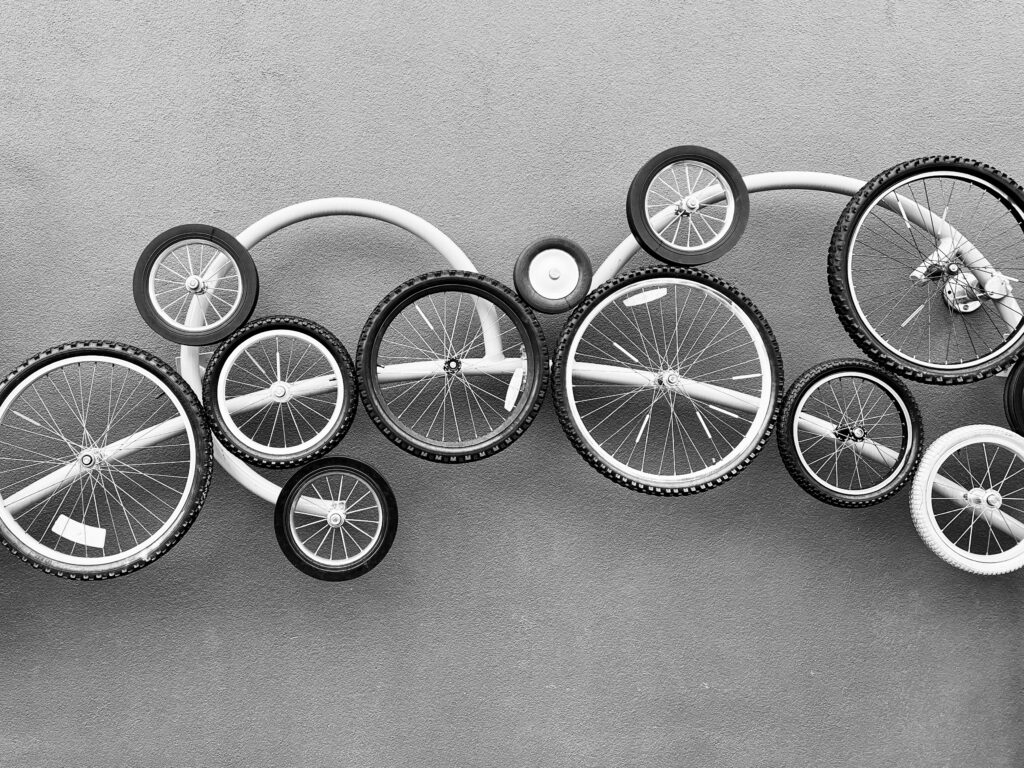
This simple act of pausing to appreciate beauty enriches my experience of time. It grounds me, reminding me of the world beyond deadlines and deliverables.
Research shows that taking a moment each day to notice a beautiful experience enhances our perception and well-being. It activates ripple effects in our neural networks, creating lasting memories and increasing our desire to preserve these moments.
By embracing beauty in experiences, we add depth to our lives, transforming routine into something remarkable.
3. Know Your Tomatoes
Harmony.
Flow.
Alignment.
In the culinary world, Chef Michael Mina finds beauty in perfectly cut tomatoes—a symbol of a team working in unison, each movement precise and purposeful. This metaphor extends beyond the kitchen.
In my work with xBlock, I recognize these “tomato moments” when our team operates seamlessly. A brainstorming session where ideas flow effortlessly. A project where each member contributes their strengths, culminating in a result greater than the sum of its parts.
It’s about cultivating awareness—of our own emotions and those of others. By tuning into these signals, we foster environments where collaboration thrives.
Keen awareness of our feelings leads to a better understanding of the emotions of others. It enhances our ability to work beautifully together, creating moments where everything just clicks.
4. Act on Beauty Daily
Reflect.
Engage.
Transform.
To reshape our neural networks and enrich our relationships, we need to practice these principles daily. It’s about integrating reflection into our routine.
I begin each day with a simple ritual. I ask myself:
- How will I use my time today?
- Can I turn an activity into a multiplier?
- What beauty might I encounter?
- What are my tomatoes—the signals of flow and harmony?
This practice doesn’t require much time, but it profoundly impacts my perception of the world. It shifts my focus from merely completing tasks to experiencing them fully.
Incorporating this reflection into my professional life, I encourage my team to consider these questions. It fosters a culture of intentionality and mindfulness, enhancing both individual well-being and collective performance.
By acting on beauty daily, we transform the ordinary into the extraordinary. We live with greater awareness, finding meaning in each moment.
5. Finding Stillness: Listening to Birdsong
Stillness.
Connection.
Alignment with nature.
Throughout history, birdsong has symbolized places where human flourishing is possible. It’s a reminder that we are part of nature, not separate from it.
In the midst of urban life and technological advancement, it’s easy to lose touch with the natural world. Yet, reconnecting with nature offers profound benefits.
I find moments of alignment during quiet walks in the park near our office. The rustle of leaves, the chirping of birds—it brings a sense of calm and perspective. It reminds me of the broader ecosystem we’re part of.
This connection doesn’t have to be elaborate. It can be as simple as opening a window to feel the breeze or stepping outside to watch the clouds.
By finding our time and place of alignment with the planet, we create beautiful moments that nourish our souls.
Creating a Beautiful Life
Busy.
Fast-paced.
Chaotic.
This is the reality for many of us. But within this reality lies the opportunity to craft a life of beauty and purpose.
Instead of feeling overwhelmed by life’s challenges, I choose to find beauty in the chaos. Rather than striving solely for happiness, I aim to create a life that’s meaningful and fulfilling.
It’s about embracing the interconnectedness of our roles and activities. Recognizing that we don’t have to sacrifice one aspect of our lives for another.
Photography and writing have become more than hobbies. They’re tools for pausing, reflecting, and engaging with the world around me. They allow me to capture the essence of moments, turning fleeting experiences into lasting memories.
By integrating these practices into both my personal and professional life, I’ve found a greater sense of balance and joy.
Time poverty is real, but it’s not insurmountable. By finding our multipliers, taking moments for beauty, knowing our tomatoes, acting on beauty daily, and listening to birdsong, we can transform our experience of time.
We can reclaim our time.
Live with intention.
Find beauty in the everyday.
So pause.
Breathe.
Look around you.